
Our Story
One Family, Three Hundred Years of Craft
Born in the medina of Marrakech into a family of rug dealers, Soufiane Zarib has spent over twenty years hand-selecting authentic Beni Ourain rugs, Tuareg mats and vintage Berber carpets — and telling the story woven into every one.
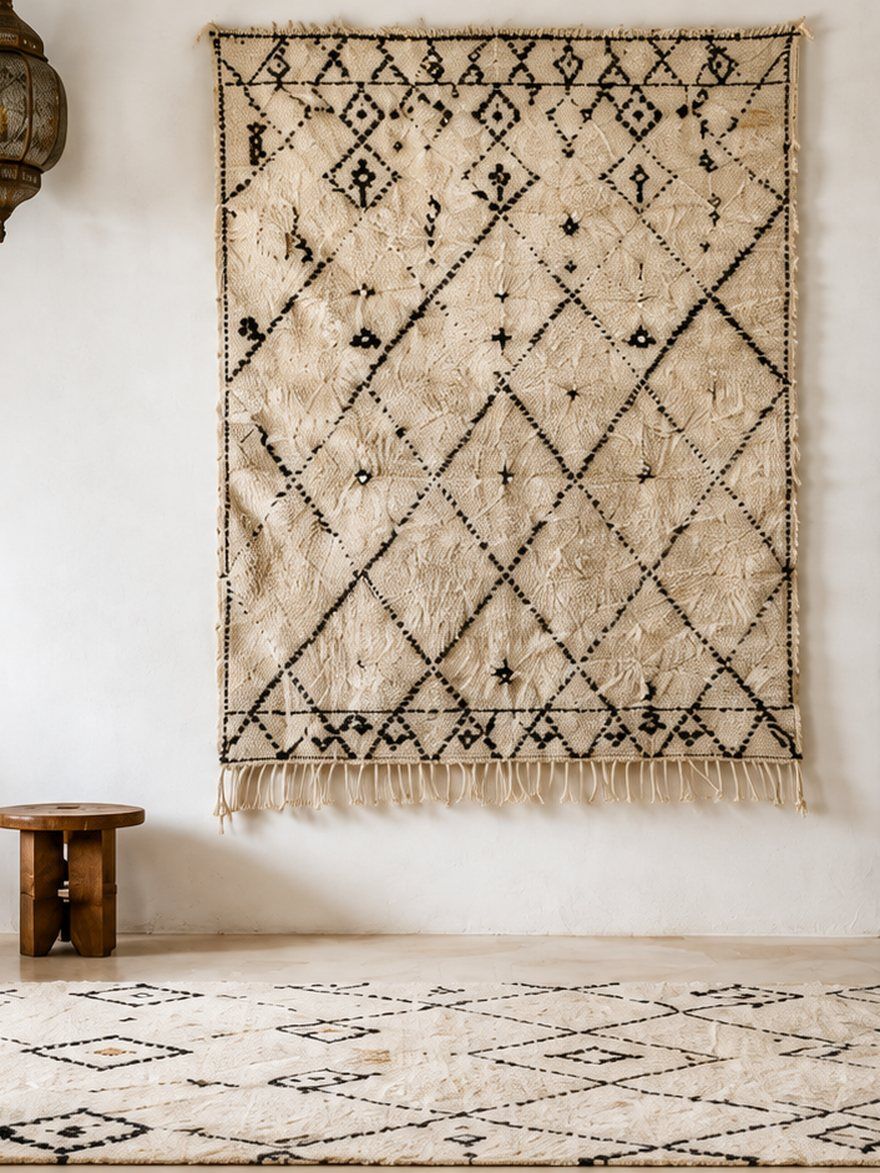
“To me, a rug is not decoration. It's a living work of art, with a history worth telling.”
Soufiane Zarib was born and raised in the medina of Marrakech, the son of a respected rug dealer, surrounded from childhood by the textures, colours and stories woven into each piece. What began as a family trade became a personal passion he has carried for over twenty years.
 Soufiane Zarib · Founder
How the Story Unfolds
01 · Born in the Medina
Soufiane Zarib grew up in the medina of Marrakech, the son of a respected rug dealer, surrounded from childhood by the textures, colours and knots of the Berber tradition.
02 · Learning by Hand
Long before he ever sold a rug, he learned to judge one — by its wool, its knot density and the honesty of its wear — at his father's side.
03 · Opening Dar el Bacha
In 2008, Soufiane opened his own boutique in the heart of the medina, choosing every piece himself rather than buying from a supplier's list.
04 · Building the Archive
As the collection grew, a working warehouse in Sidi Ghanem became the archive behind the showroom — where rugs are stored, sorted and prepared to travel.
05 · Twenty Years, One Promise
The standard has never changed: Soufiane will not sell a rug that is not authentic, or not in good condition — a promise that is the whole business.
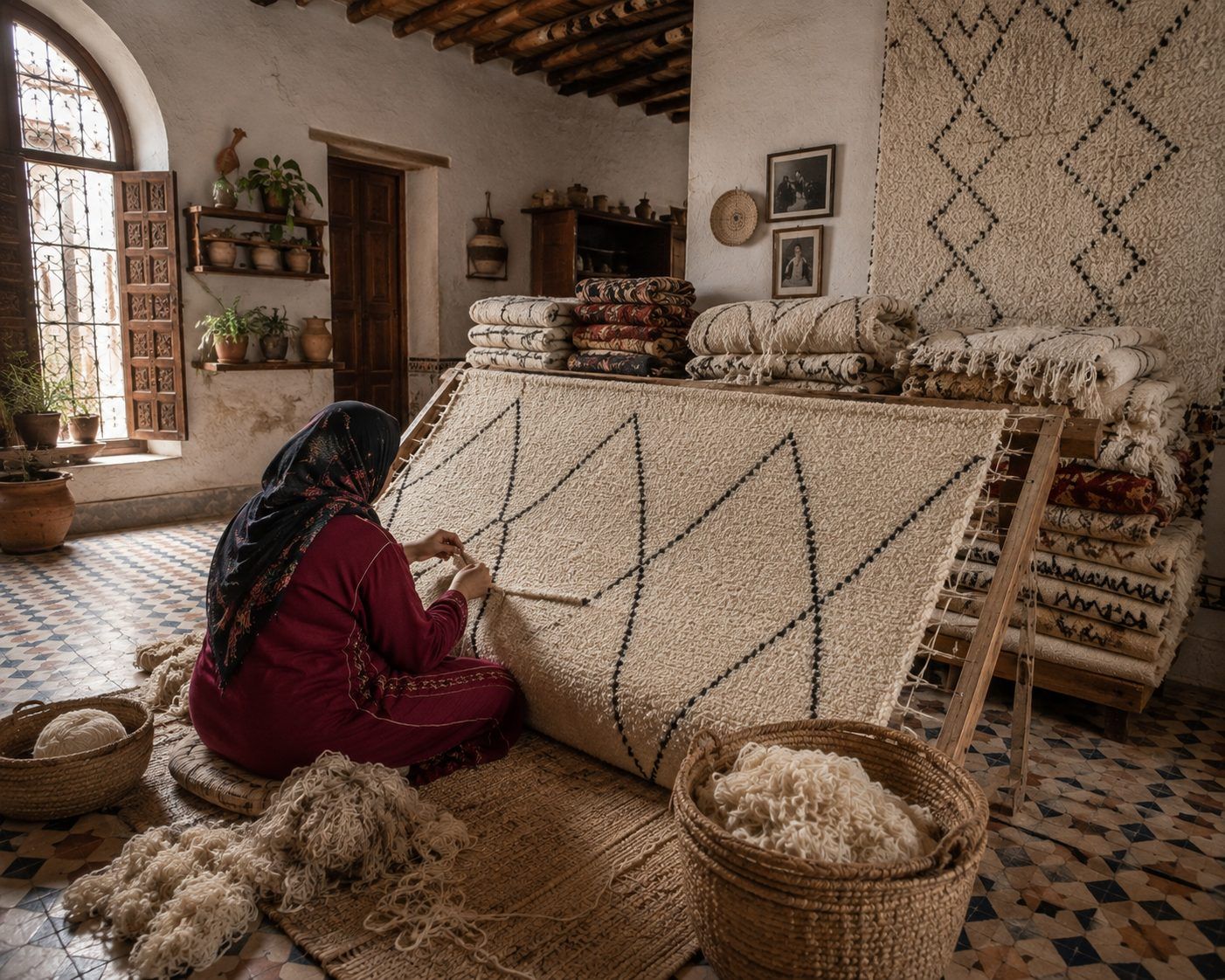
Three Hundred Knots, One Hour of a Woman’s Day
Every piece is sourced in person and judged by hand. Soufiane will never sell a rug that is not authentic, or that is not in good condition — that promise is the whole business, and it is why people come back.
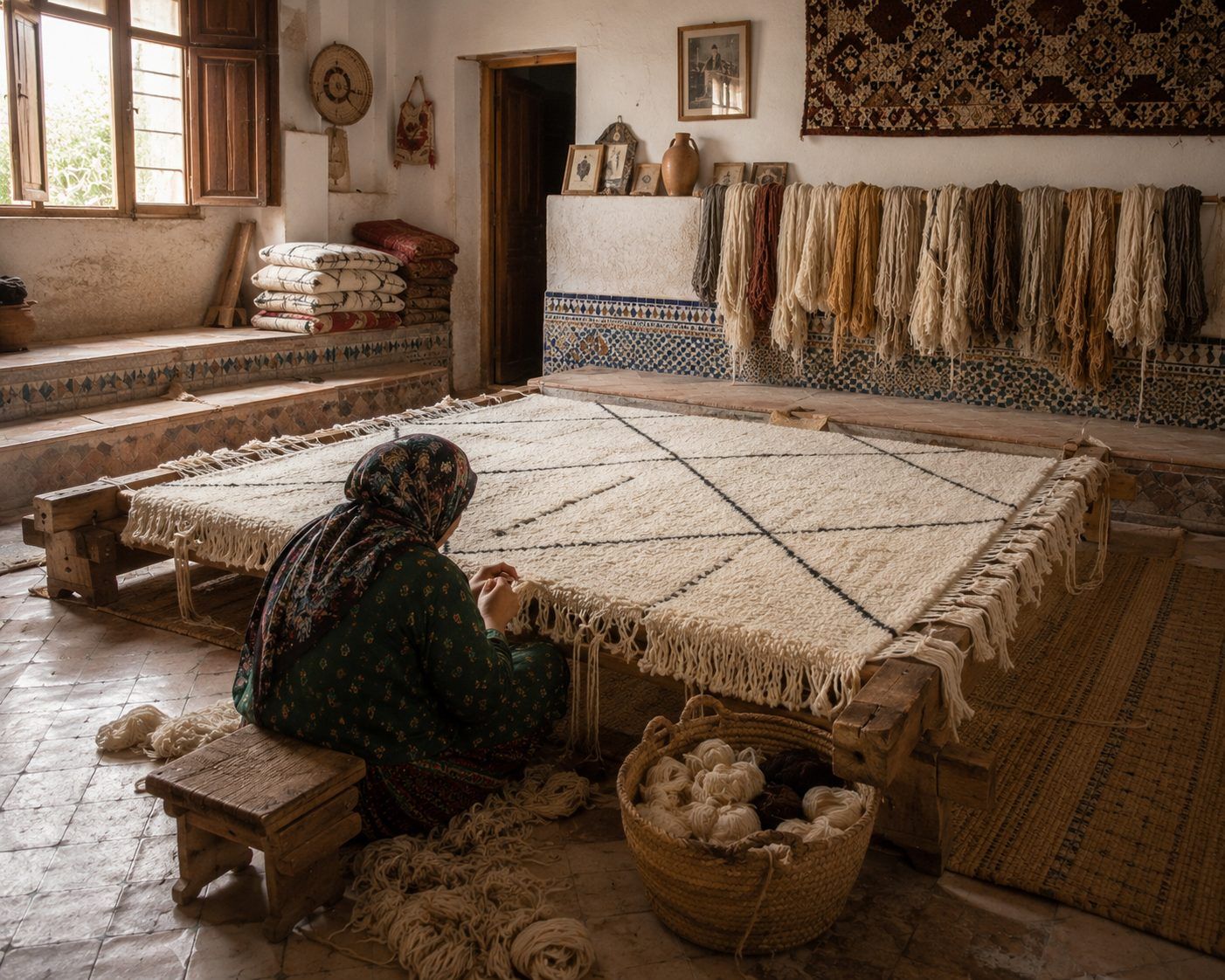
Authentic Berber Craftsmanship
Nothing here is industrial. Every rug is sheared, spun and knotted by hand — a three-metre piece takes about eleven weeks to complete, passed between the same few pairs of hands from start to finish.
Wool & washing
Sheared in spring, washed by hand
Knotting
The Berber symmetrical knot, tied by memory
Finishing
Hand-sheared, sun-dried in the medina
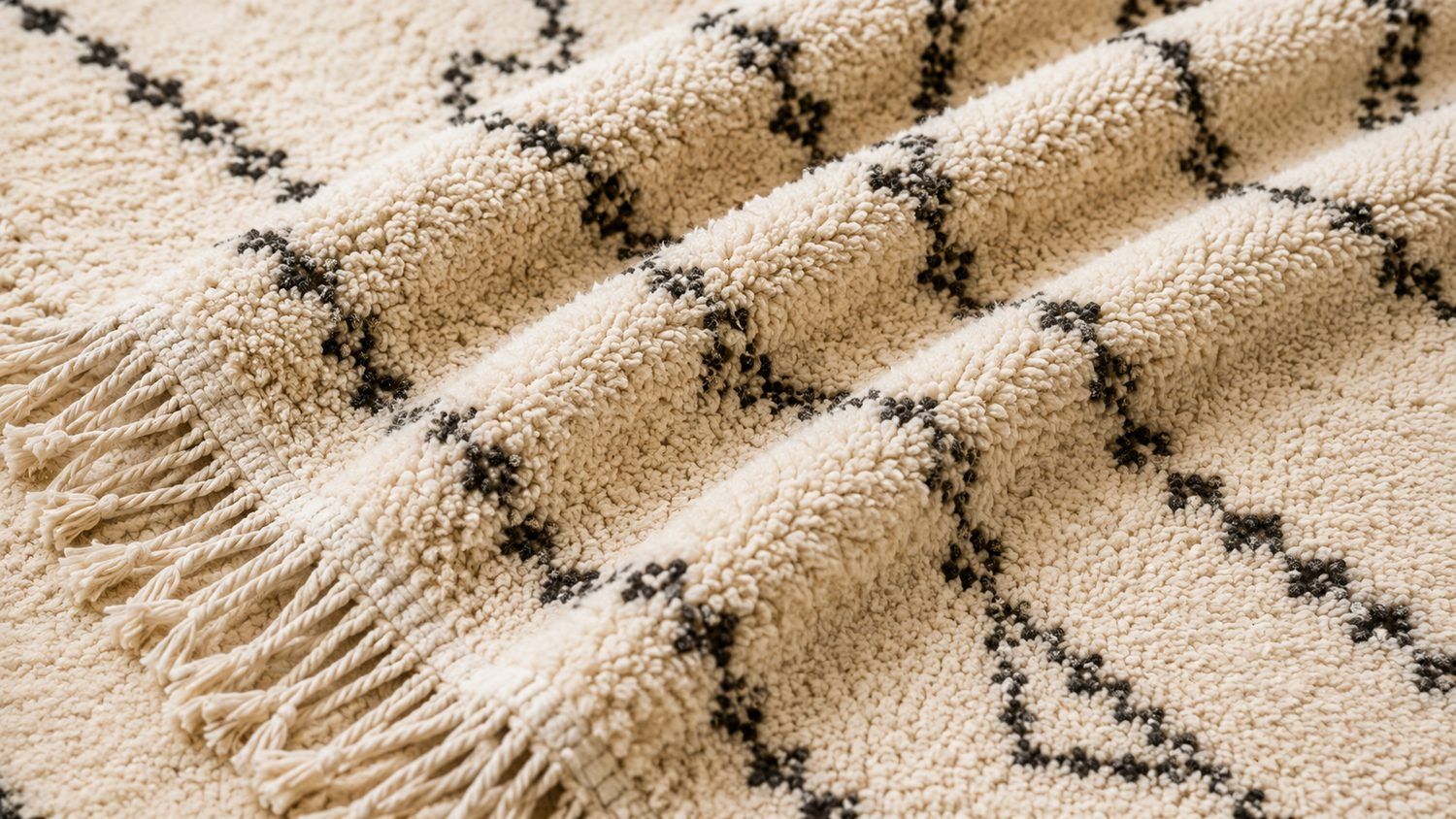
Grown in the Atlas, Spun by Hand
Every carpet in this collection is made from 100% natural Atlas Mountain wool, sheared in spring, washed in river water and spun by hand before a single knot is tied. Nothing is bleached, nothing is machine-made, and no synthetic fibre ever touches the loom.
The high lanolin content of this highland fleece makes a Beni Ourain rug naturally resistant to dirt and moisture, while the dense Berber knot lets it absorb decades of use and simply soften with age — a long-lived object built to be inherited, not replaced.
Behind Every Rug
A family archive built one piece at a time — from the workshop floor to the showroom walls, this is where the story lives.


More from the archive on @soufiane.zarib
The Story of Beni Ourain Rugs
Beni Ourain rugs take their name from a confederation of Berber tribes of the Middle Atlas, where for centuries women have sheared, washed, spun and knotted the wool of their own flocks into the ivory, lozenge-patterned carpets now found in homes far beyond Morocco. The craft was never written down — it passed from mother to daughter, memorised rather than drawn, which is why the pattern on every genuine Beni Ourain rug carries small, human irregularities that no machine could reproduce.
Soufiane Zarib grew up inside that world. Raised in the medina of Marrakech as the son of a rug dealer, he learned to judge a carpet the way his father taught him — by its wool, its knot density and the honesty of its wear — long before he opened his own boutique at Dar el Bacha. What began as a family trade became a personal one: over twenty years later, he still travels to select every rug himself, and still refuses to sell a piece he would not want to keep.
That standard is why the collection runs as deep in vintage Berber designs and rare Tuareg mats as it does in new Beni Ourain work, and why every rug leaves Marrakech with its history intact rather than a generic label. It is also why the warehouse in Sidi Ghanem exists at all — a working archive, built one careful acquisition at a time, of pieces judged worth keeping.
The story continues with every rug that leaves Marrakech. Visit the showroom or the archive in person, or explore the full collection online — Beni rugs, Tuareg mats and vintage Berber carpets, each one hand-knotted, each one traceable to the hands that made it.
What we stand for
Authenticity above all
Soufiane will never sell a rug that isn't genuine or in good condition — that promise is the whole business.
Chosen by hand
Every piece is sourced and judged in person, never from a catalogue or a supplier's list.
Fair to the weavers
Rugs are bought directly, at a price that respects the months of work behind every knot.
Made to outlast trends
Natural wool and a dense hand-knot mean a Beni rug is inherited, not replaced.